United in Diversity and University of British Columbia Empower Medical and Data Science Leaders
Denpasar, Bali – On 23-26 June, 2025, United in Diversity (UID), in collaboration with University of British Columbia (Vancouver) and supported by Bio Farma and D&V Medika, hosted a four-day professional course, Demystifying AI in Healthcare, at UID Bali Campus, located within the Kura Kura Bali Special Economic Zone. This groundbreaking professional course was designed to make fundamental concepts of artificial intelligence (AI) and data science more accessible and practical for healthcare professionals and leaders in Indonesia.
Demystifying AI in Healthcare is the inaugural program under the UID Health initiative, part of the United in Diversity Foundation’s mission, led by Sir Gordon Duff, Honorary President of UID. Sir Gordon emphasized, “Indonesia being an archipelago of 6,000 populated islands has unusual challenges and excellent opportunities. In biological terms, health and disease are phenotypes resulting from interaction of genotypes (genomes) with their environment. Indonesia has great variation in both human genotypes and environments, providing great scope for medical discoveries of new treatments and ultimately the knowledge for disease prevention.”
Building on this vision, UID Health seeks to position Indonesia at the forefront of emerging health technologies for the benefit of all. The initiative aims to expand Indonesia’s leadership in future medical research and practice by bringing together top faculty in health and data science for collaborative events and research. Through this effort, UID Health is committed to upskilling healthcare and data science professionals in artificial intelligence and machine learning, while supporting development of best clinical practice and regulation in this rapidly advancing field.
The Demystifying AI in Healthcare course curriculum was developed by leading faculty from the University of British Columbia (UBC), Professor Raymond Ng, Department of Computer Science and Director of Data Science Institute, and Professor Anita Palepu, Eric W. Hamber Chair and Head of Department of Medicine.
The course aims to “demystify” AI, shifting it from a theoretical, complex concept to a practical toolbox that healthcare professionals can understand and use with clinical confidence. Beyond simply introducing AI, the course is designed to foster meaningful collaboration between clinicians and data scientists, who often speak different technical languages but share the same ultimate goal: delivering better patient care. Prof. Anita Palepu explained, “One of the issues that Dr. Raymond Ng and I noticed about 5 years ago is that AI is going to be part of our healthcare landscape and we recognize that clinicians need to have data science literacy. It’s not that they have to learn how to code, or do engineering, but they need to be able to communicate with data scientists and data engineers in order to help them create solutions for healthcare issues that they see in the frontline.”
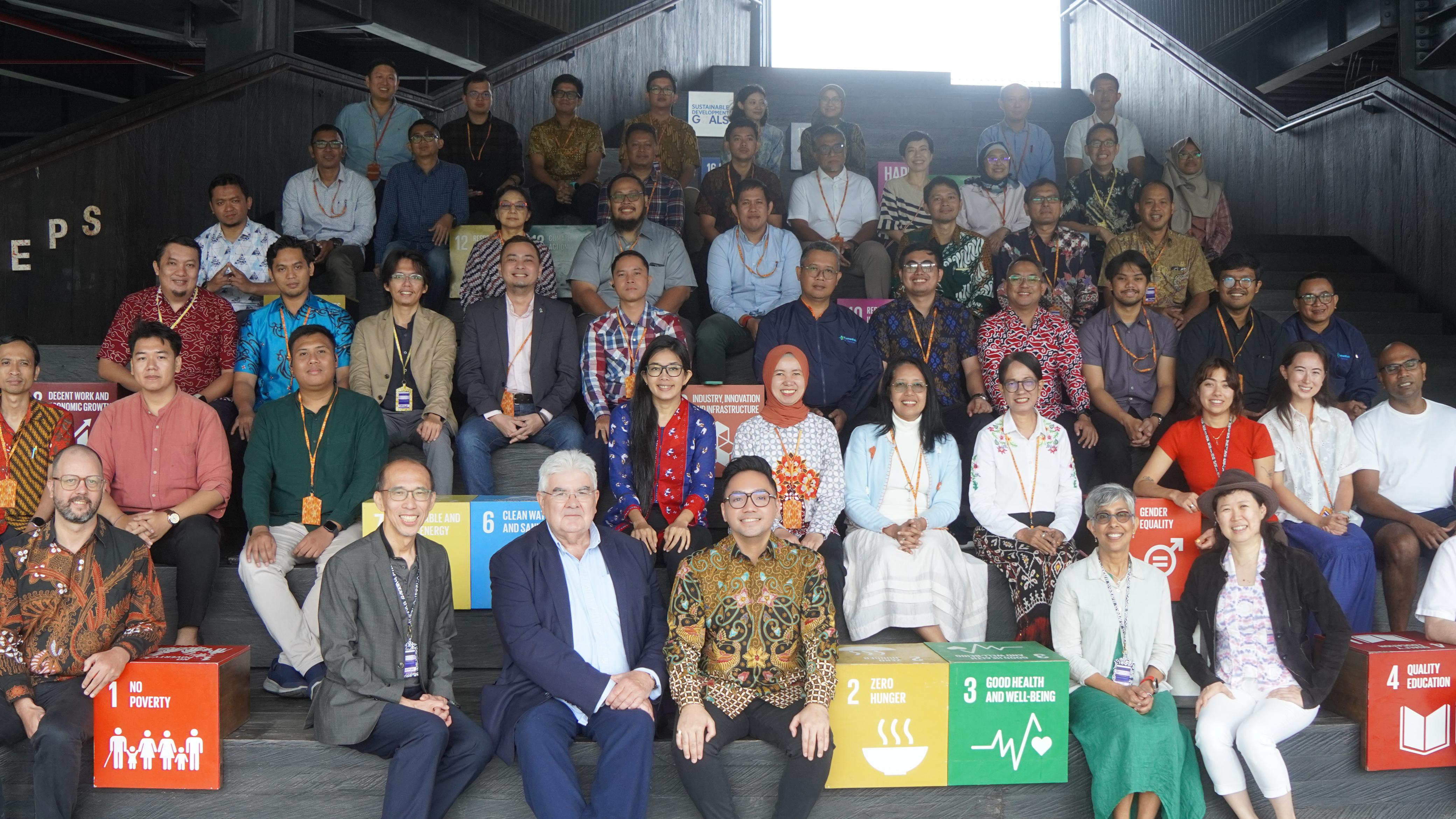
This goal was powerfully embodied in the diverse backgrounds of the 50 participants, who were made up of clinicians, biomedical engineers, medical educators, national leaders and researchers, forming a truly dynamic, cross-sector learning community. Participants came from top medical and biomedical engineering universities such as Universitas Gadjah Mada, Institut Teknologi Bandung, Udayana University, Universitas Padjadjaran, Catholic University Parahyangan, Swiss-German University, Universitas Muhammadiyah Malang, and UIN Maulana Malik Ibrahim, among others. The program also welcomed professionals from leading hospitals and clinics, including RSUPN dr. Cipto Mangunkusumo, RSUD Cengkareng, Altius Hospital, and Prima Medika Hospital, as well as key industry players such as Bio Farma and D&V Medika.
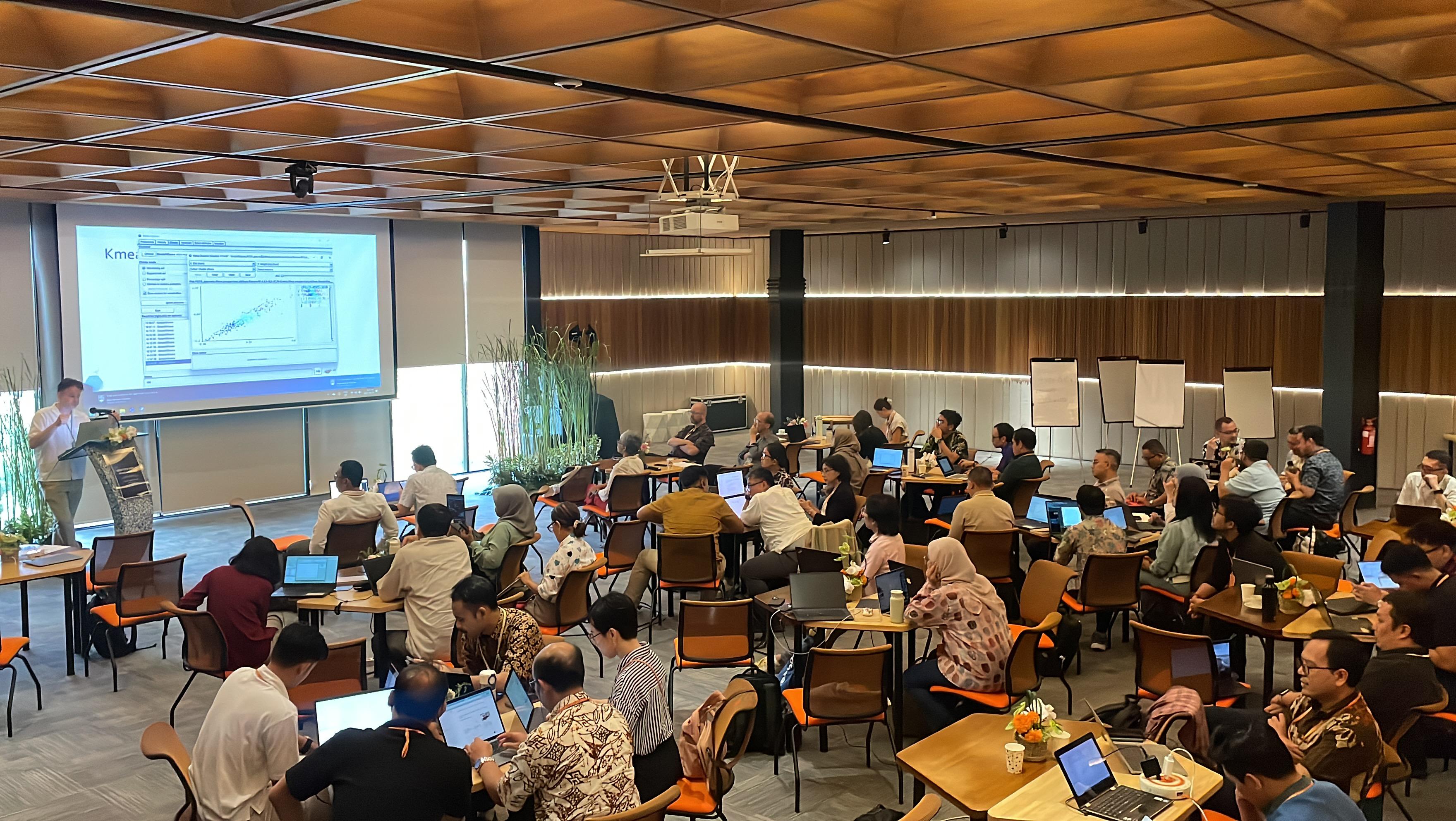
It is rare for professionals from these fields to sit side by side, learning, exploring, and problem-solving in real time. Yet, for four intensive days, they engaged in deep, collaborative conversations—bridging disciplines, sharing perspectives, and building a common language around AI in healthcare. This unique convergence not only enriched the learning experience but also laid the foundation for future interdisciplinary collaboration that is essential for driving meaningful innovation in patient care.
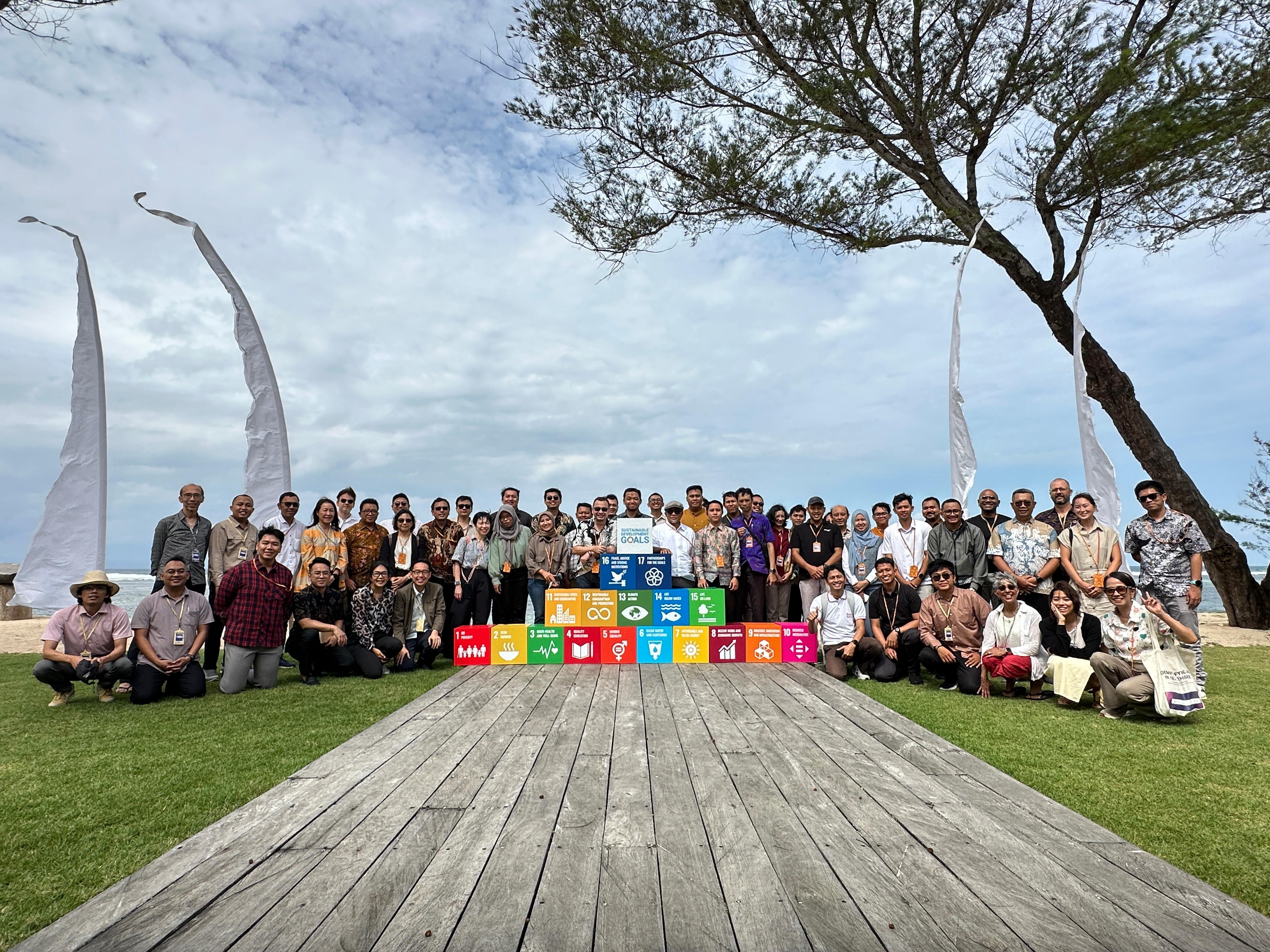
Participants and faculty at Surf Surf by The Wave, Kura Kura SEZ
Photo credit: UID
In addition to the introductory sessions on AI and its practical applications delivered by Professor Ng and Professor Palepu, participants also benefited from hands-on learning sessions led by Robert Bergen and Saffrin Granby, data scientists from UBC’s Data Science Institute and Vancouver Coastal Health. They provided practical training on using the WEKA software and Python for healthcare-related data analyses—designed specifically for participants with no prior programming background.
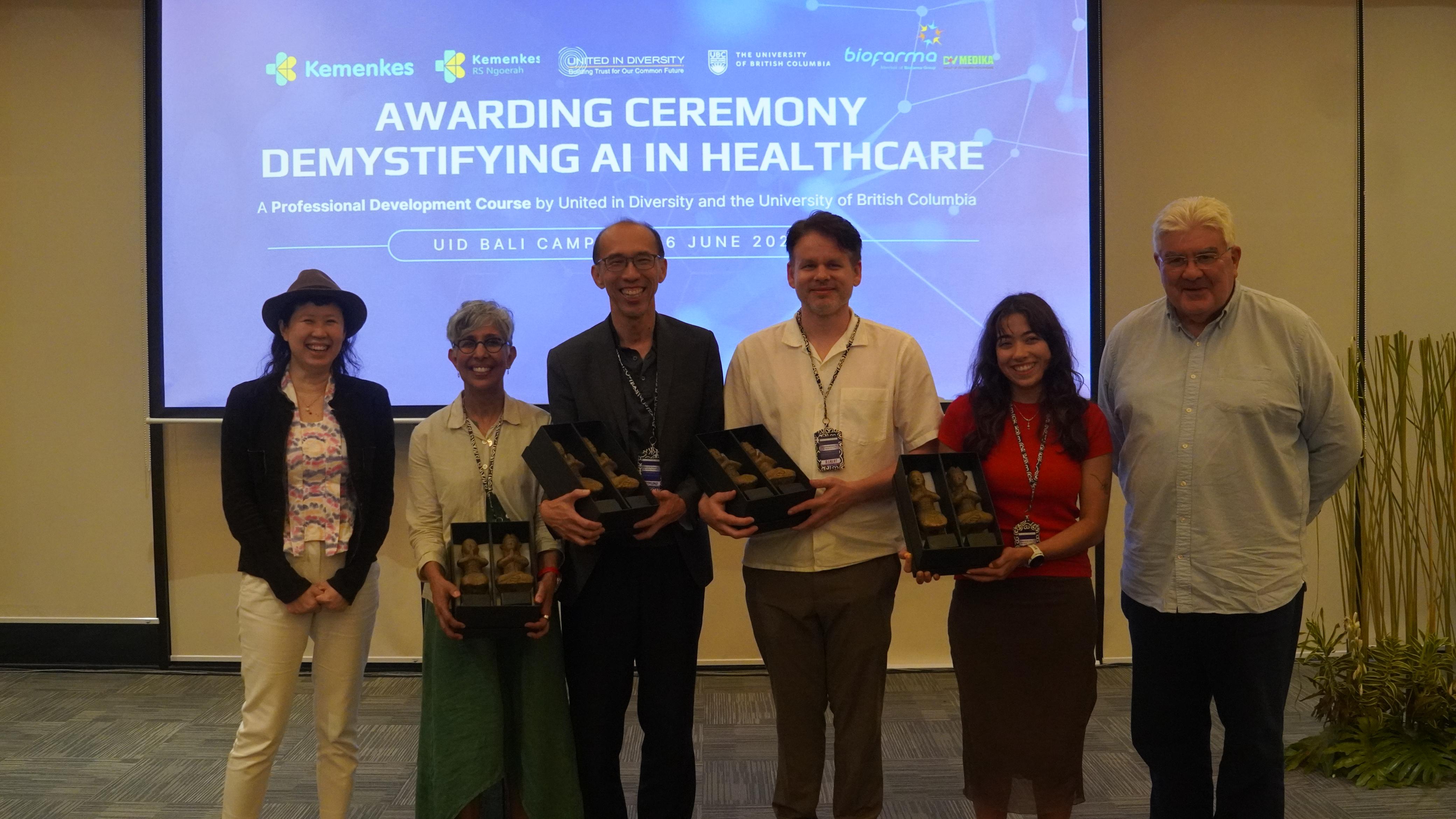
(Left-Right) Cherie Nursalim, Prof. Anita Palepu, Prof. Raymond Ng, Robert Bergen, Saffrin Granby, Sir Gordon Duff
Photo credit: UID
The course also featured expert sharing sessions from two distinguished speakers: Dr. Eric Daniel Tenda, DIC, Ph.D, Sp.PD, K-PMK, FINASIM, FISQUA, Board Committee of National Artificial Intelligence for Health, Ministry of Health of the Republic of Indonesia, and Dr. Lohendran Baskaran, Senior Consultant at the National Heart Centre Singapore. Both speakers provided insightful demonstrations of how artificial intelligence is already supporting their clinical practices and enhancing decision-making processes.
Dr. Lohendran Baskaran reflected, “I think AI is moving from imagination to research and computer science to real implementation and use. Because Indonesia is so young and learning so quickly there’s a good chance for doctors to learn about and implement AI so they can become leaders in the region, if not in the world, for how they practice AI in healthcare to help patients.” Dyah Kanya Wati, a pediatric specialist at RSUP Ngoerah and Associate Professor in the Pediatric Specialist Program at Udayana University, highlighted the importance of Dr. Baskaran’s presence in the program, “His sharing as a practicing cardiologist who actively applies AI in his work was especially valuable for us as clinicians, as it offered much-needed practical perspectives and real-world examples from the field,” she remarked.
Additionally, Dr. Eric Tenda shared the Ministry of Health’s strategic vision for the development and integration of AI into Indonesia’s healthcare system, emphasizing its potential to transform healthcare delivery on a national scale. In outlining the critical steps for AI adoption, Dr. Tenda emphasized that the first—and most essential—step for any healthcare institution is to conduct a thorough gap analysis. This helps institutions understand their current capabilities, identify existing challenges, and uncover real opportunities where AI can make a meaningful impact. He encouraged Indonesian healthcare institutions and practitioners to adopt AI, which the Ministry of Health is currently supporting through funding and incentives, capacity building, training programs and pilot projects and partnerships. He concluded by giving an example of how AI is already being used in Indonesia for tuberculosis detection.
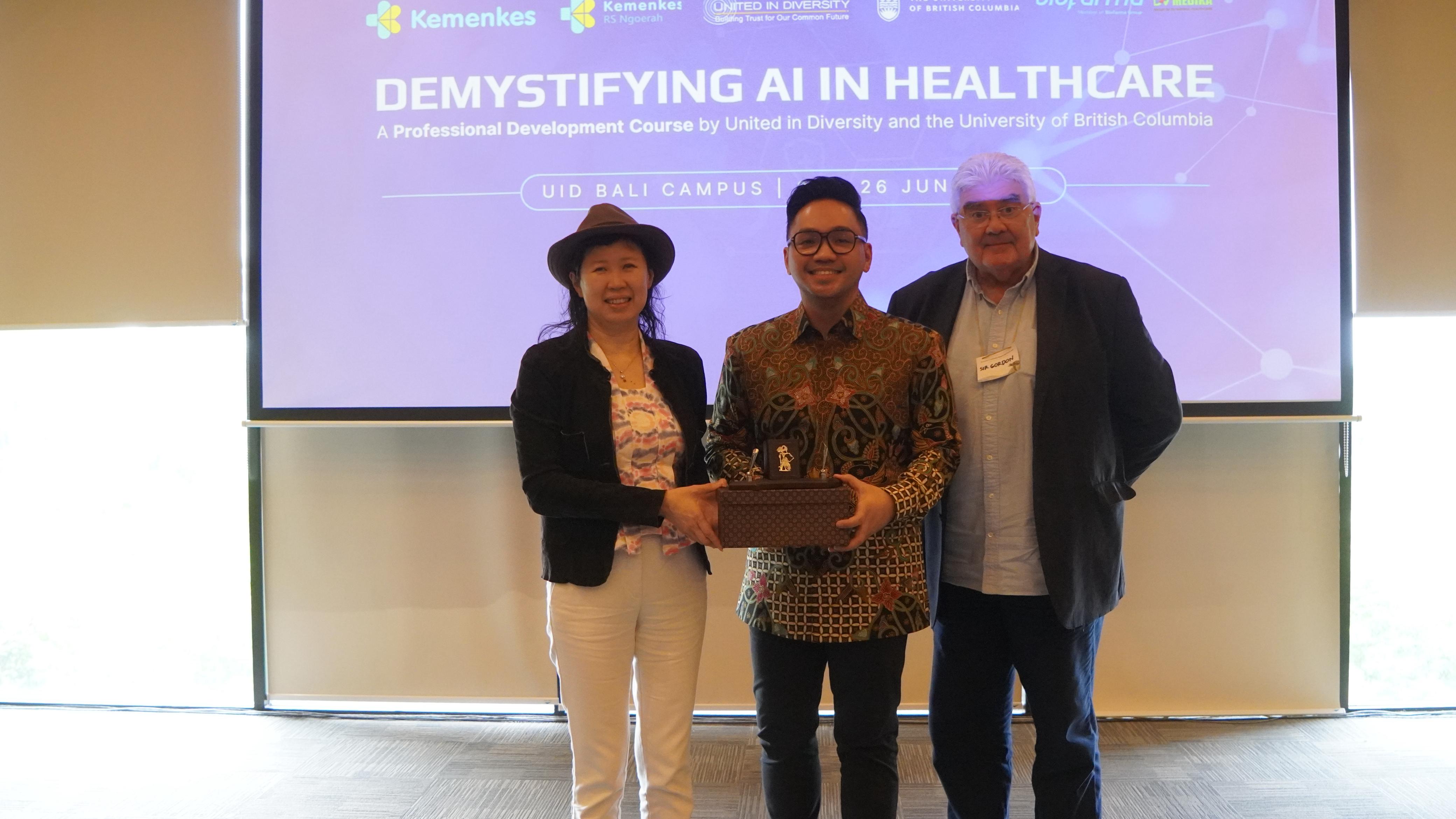
Cherie Nursalim and Sir Gordon Duff with Dr. Eric Tenda
Photo credit: UID
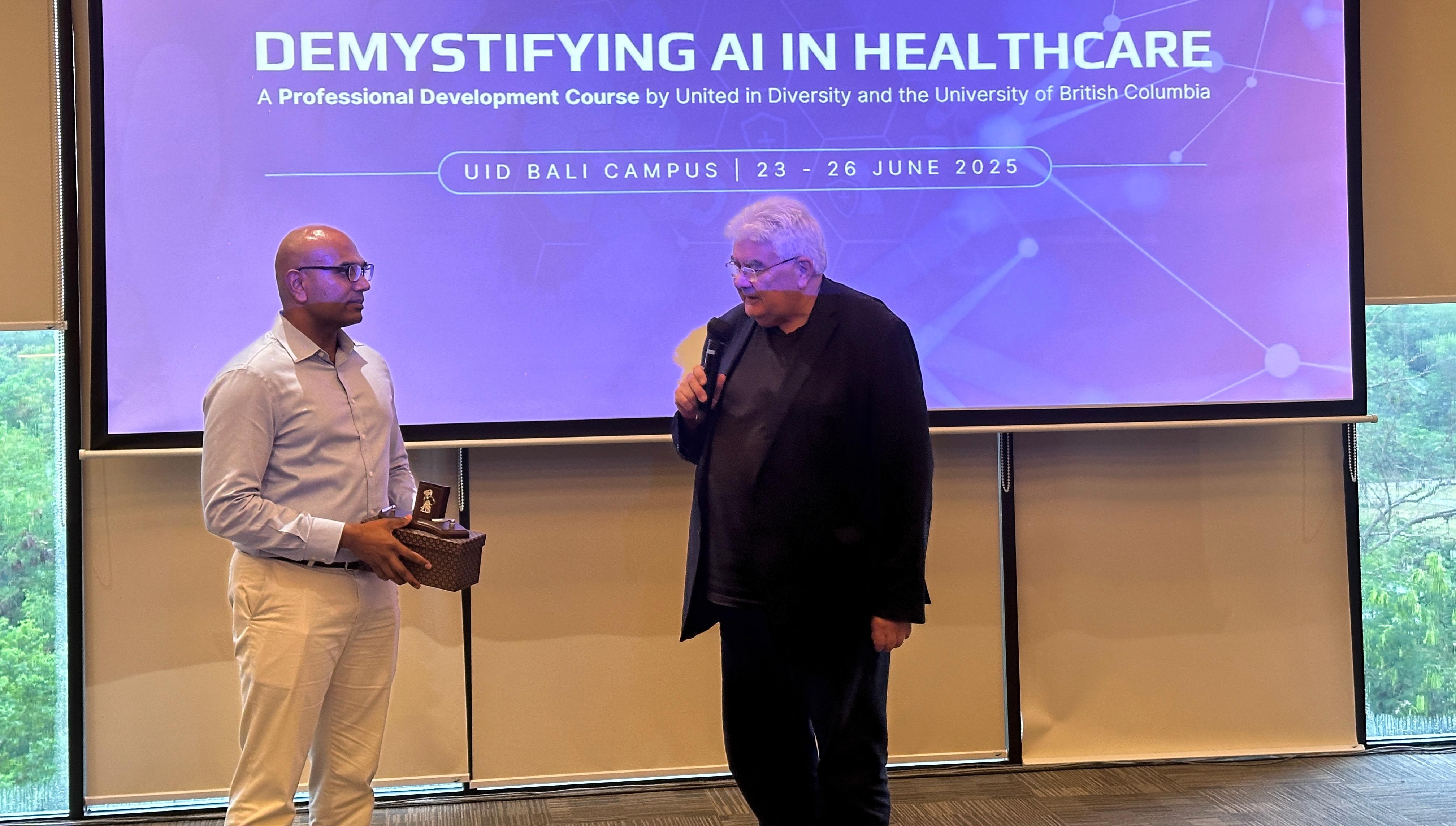
Dr. Lohendran Baskaran and Sir Gordon Duff
Photo credit: UID
The Future of AI in Indonesia’s Healthcare System
The course was not just a learning experience, it was the beginning of a collaborative journey. As Robert Sinto from RSUPN Dr. Cipto Mangunkusumo emphasized, “AI is not a one-man show—it is a collaboration, where each of us has a unique and irreplaceable role in completing the chain, from development to real-world application in healthcare.” This spirit of cross-sector collaboration was evident throughout the program, as participants from diverse fields sat side by side to build a shared understanding. Dr. Putri Damayanti from the University of Muhammadiyah Malang captured this well, reflecting that the course successfully “bridged the gap between IT professionals and doctors, allowing healthcare and technology to move forward together, side by side.”
Through this program, participants began to map Indonesia’s pathway towards responsible AI implementation in healthcare. As Dr. Tenggudai Petronella Littik from the Indonesian General Practitioner Association noted, “We are fully aware that this is a long journey, but I am confident that soon after this event, we will take the first steps to raise awareness and build AI literacy among our colleagues—doctors and physicians across Indonesia.”
Endnote
The momentum built during these four days extends beyond the walls of the classroom. The connections forged, the knowledge shared, and the vision set forth are intended to spark a growing community of practice and research that will continue to explore, innovate and lead the future of AI in Indonesia’s healthcare system to support better lives for all.
For further information, please contact:
Dita Saraswati | dita.saraswati@tsea.asia