UID Talk Eps. 28: Anindya Bakrie Calls for Indonesia's Shift from "Potential" to "Execution"
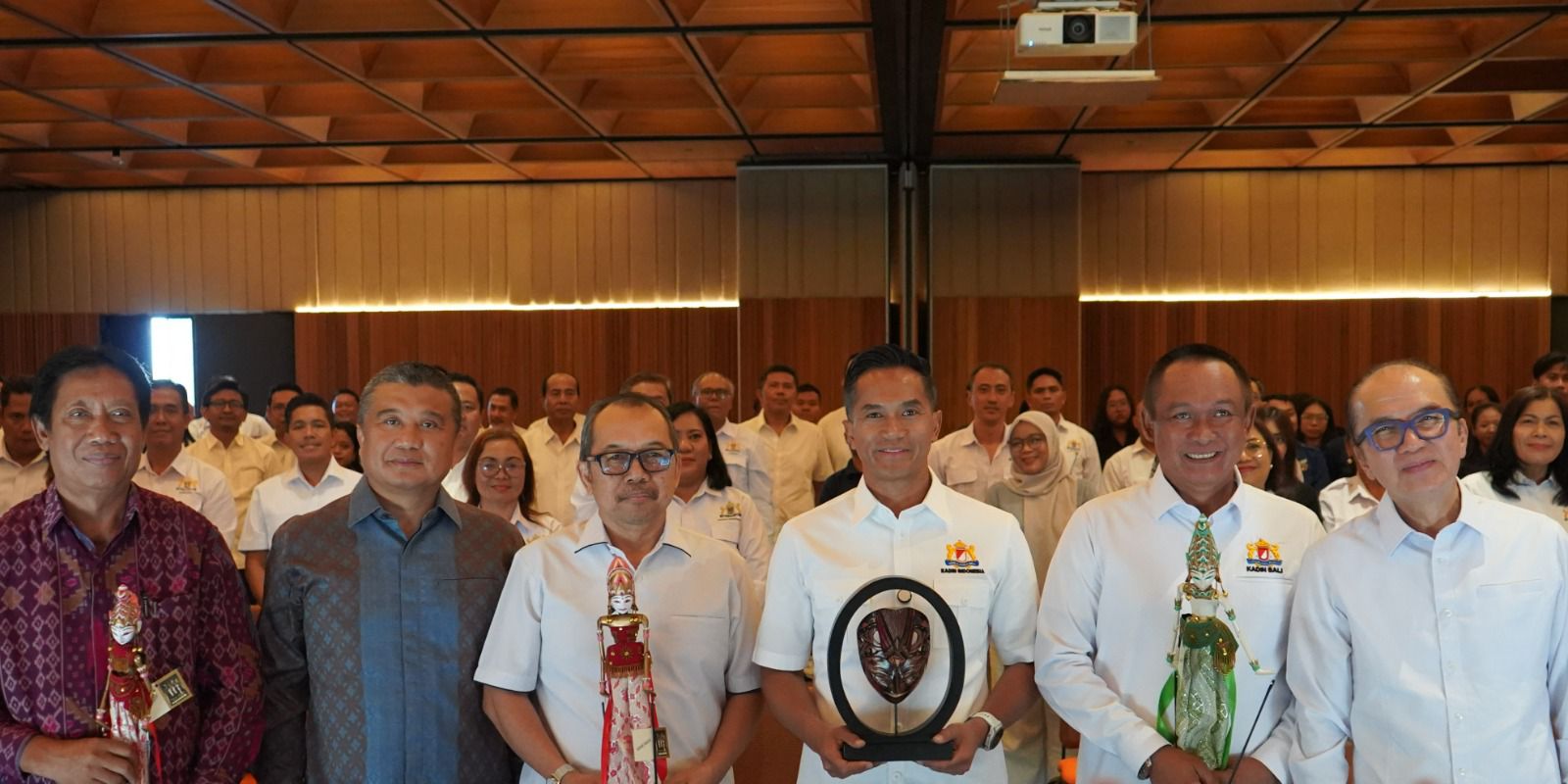
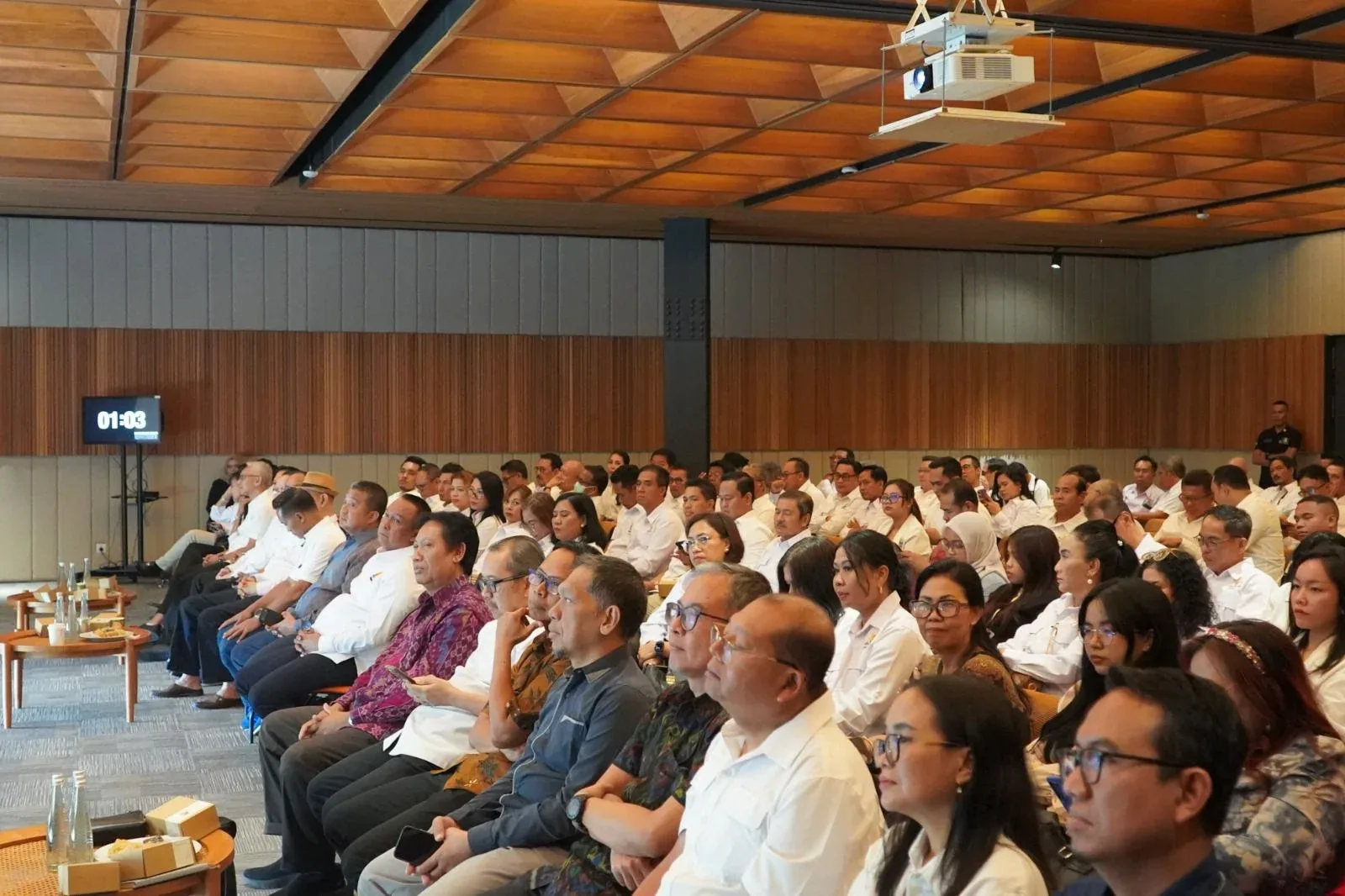
On Saturday, July 4, 2026, UID Bali Campus, Kura Kura Bali SEZ - United In Diversity Foundation held the 28th episode of UID Talk under the theme "Indonesia's Economic Outlook: Peluang, Tantangan, dan Arah ke Depan," featuring Anindya Bakrie, Chairman of KADIN Indonesia, as the keynote speaker. Anindya Bakrie delivered a 30-minute public lecture, followed by a talkshow session with Prof. Dr. I Nyoman Mahaendra Yasa, S.E., M.Si., Professor of Regional Economics and Inequality at the Faculty of Economics and Business, Udayana University, moderated by Trisno Nugroho, former Head of the Bank Indonesia Representative Office in Bali (2019–2023). The event was attended by around 120 participants, including local entrepreneurs, KADIN Bali members, academics, and students.
The event was opened by Tantowi Yahya, President of the United In Diversity Foundation, who in his remarks highlighted Indonesia's economic growth in the first quarter of this year at 5.61 percent, the highest in thirteen years, while also noting Bali's heavy reliance on tourism, which accounts for around 56 to 60 percent of the region's economy, making the shift toward a business model that grows together with Bali a necessity. He affirmed that United In Diversity exists as a cross-sector meeting space for business leaders, government, academics, and young people to listen to and challenge one another's perspectives, a spirit that underpins UID Talk.
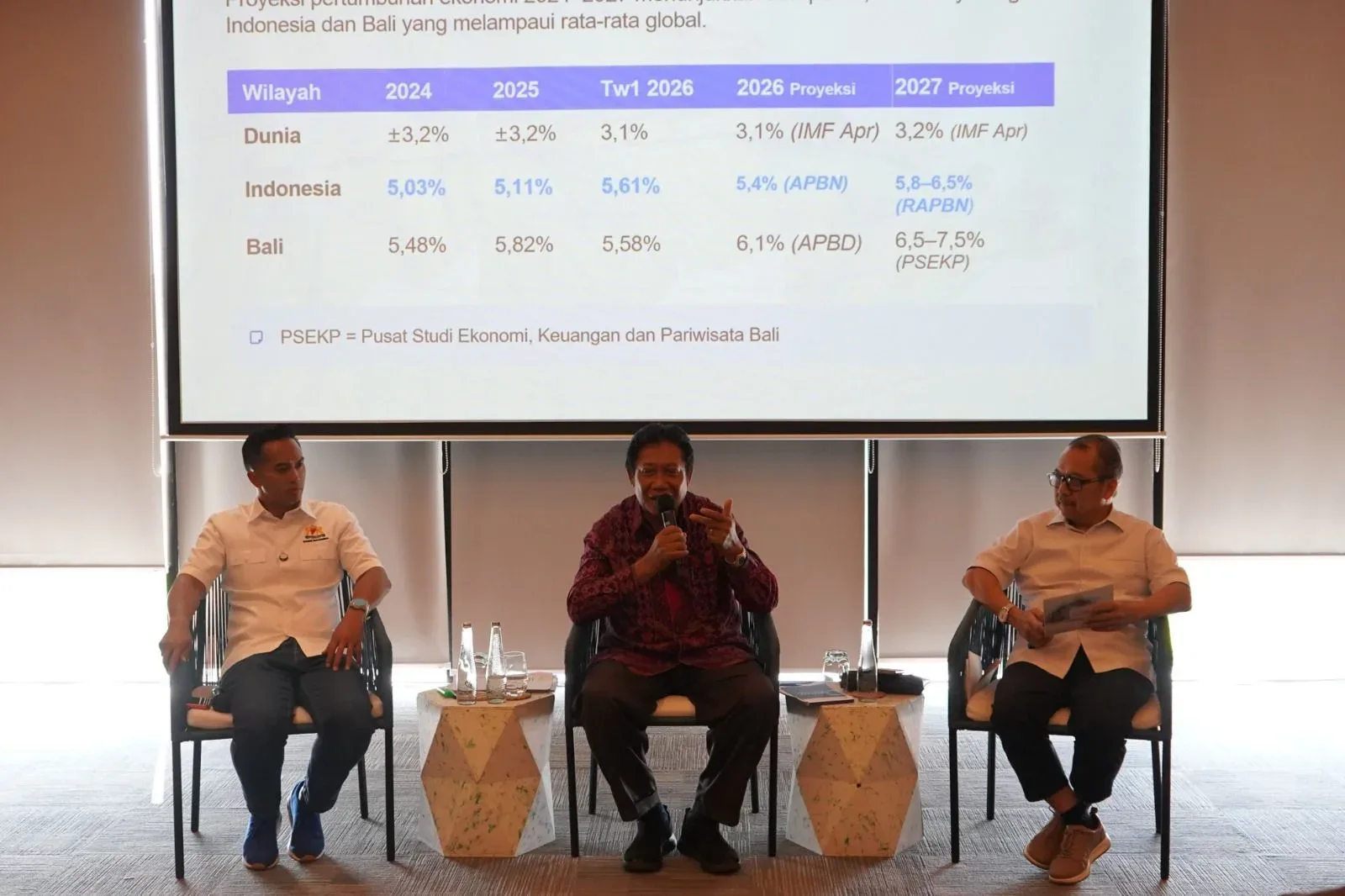
In his presentation, Anindya Bakrie noted that the global investment narrative around Indonesia has entered a new phase. While Indonesia was previously marketed largely on "potential," such as its demographic dividend and natural resource wealth, global investors now assess the country based on its actual execution capacity. He outlined three criteria that now serve as key benchmarks for investors: the ability to execute large-scale projects with speed and precision, consistent and predictable regulatory certainty, and the availability of talent capable of shifting from commodity-based labor to innovation and technology-driven roles. He emphasized that the world is moving from a logic of "lowest price" to one of "trust," amid an increasingly fragmented geopolitical landscape.
On the macroeconomic front, Anindya Bakrie shared that Indonesia's economic growth in the first quarter of 2024 stood at 5.11 percent, the highest among major economies, with a debt-to-GDP ratio maintained at a safe 46 percent. He noted that Indonesia needs to achieve growth in the range of 5.5 to 6 percent between 2026 and 2027 to escape the middle income trap. Under the "China Plus One" strategy, Indonesia is said to hold a strong bargaining position, supported by a monthly trade surplus of around 2 billion US dollars, which opens up greater room to negotiate entry into high-tech supply chains such as semiconductors and green energy.
Anindya Bakrie also stressed the importance of shifting from a natural resource-based economy to a human resource-based one. He pointed to the energy transition through the downstreaming of nickel, copper, and bauxite into battery manufacturing and electric vehicles, as well as Indonesia's potential in the digital and AI revolution, particularly through its advantage in green energy from hydro and geothermal sources needed by global data centers. He noted that Indonesia is already embedded in global supply chains, from components for Boeing aircraft to products such as Uniqlo, Starbucks, and Milo, with the next challenge being to increase the value derived from that position.
Meanwhile, Prof. Nyoman Mahaendra Yasa highlighted the specific challenges facing Bali through the concept of "Bali Berubah untuk Melompat" (Bali Changing to Leap). He recalled that Bali's economy contracted by as much as minus 9.7 percent during the Covid-19 pandemic, far deeper than the national average, due to its heavy reliance on a single sector, tourism. To prevent similar vulnerability in the future, a long-term roadmap has been established through the 100-Year Bali Development Plan, focusing on quality tourism that prioritizes value over volume, strengthening the digital and creative economy, organic agriculture, the blue economy, and green energy, while safeguarding Bali's three core assets: nature, people, and culture.
The discussion also touched on a number of systemic challenges that need to be addressed, including corruption that continues to erode private sector competitiveness, the gap between high-level policy targets and execution on the ground, and environmental threats such as coastal erosion in Bali, which has drastically narrowed in some areas. Anindya Bakrie closed the session by emphasizing that Indonesia needs to turn stability and geopolitical neutrality into a strategic advantage, shift from exporting natural resources to exporting innovation and high-value products, and build a regulatory environment free from corruption in order to attract long-term investment and move beyond the middle income trap toward the vision of Indonesia Emas 2045.
Through the UID Talk program, UID remains committed to continuing strategic, cross-sector discussions on issues critical to Indonesia's future, while serving as a space for learning and dialogue for the wider community, particularly young people in Bali.