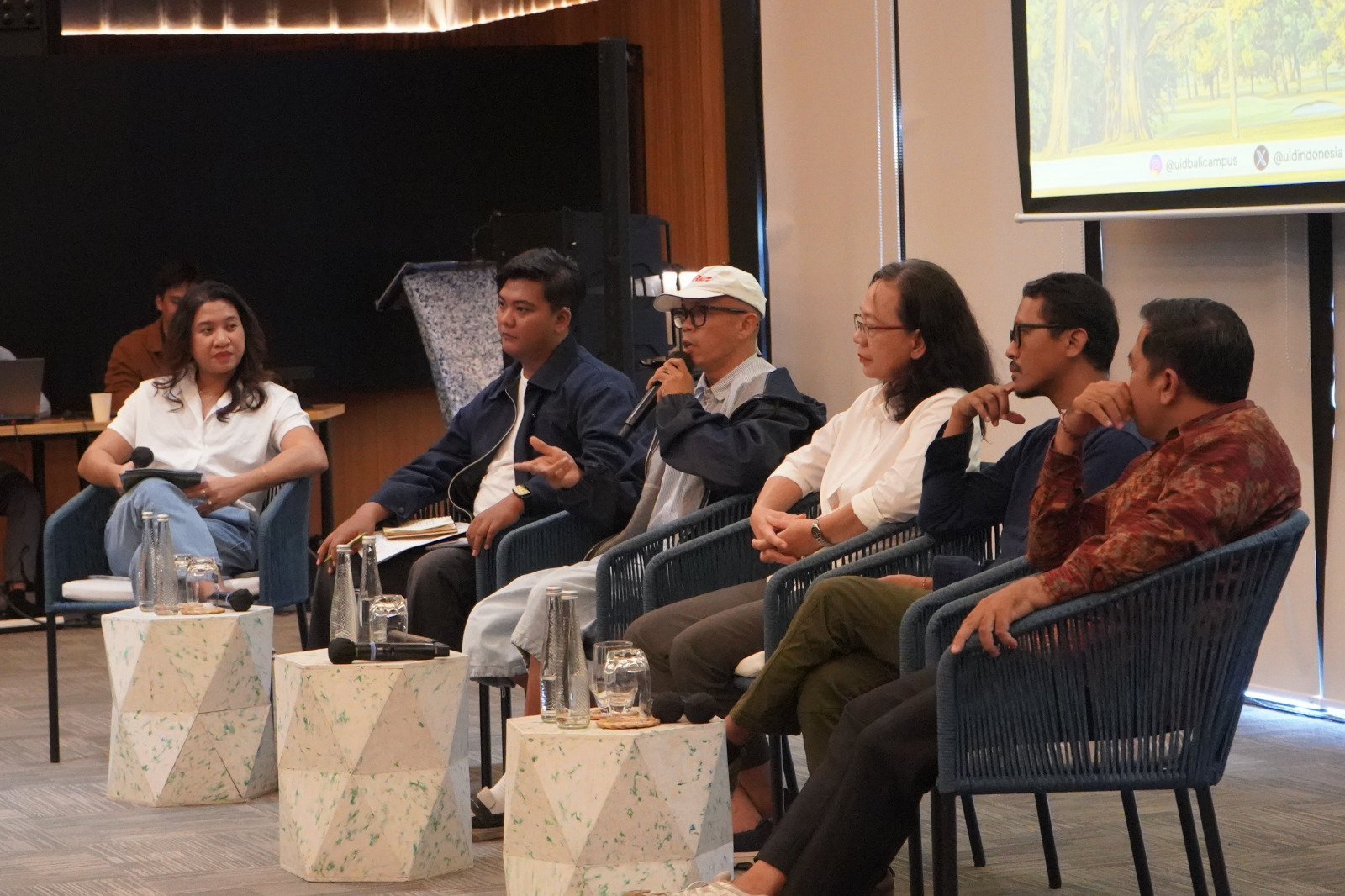
UID Talk 24 : Which One Matters the Most, Upstream or Downstream on Waste Management?
Denpasar, Bali – March 30, 2026 – United In Diversity (UID) Bali Campus, a leading not-for-profit foundation committed to building bridges for sustainable development, successfully hosted UID Talk #24 at Awan Auditorium, UID Bali Campus, Kura Kura Bali SEZ. The initiative aimed to explore the critical question of whether upstream or downstream approaches matter most in addressing today’s escalating waste challenges.
UID Talk #24 is an interactive talk show designed to bridge multi-stakeholder perspectives and inspire collaborative, system-level solutions toward a zero-waste future.
The event served as a platform to reflect on how waste is understood today, highlighting that it is not only an environmental issue but also closely connected to culture and everyday behavior.
The event engaged a diverse group of participants, including environmental practitioners, community leaders, entrepreneurs, and youth, addressing the root causes of waste issues, from lack of public awareness to shifts in consumption patterns and overproduction in industries.
“Waste is not just a technical issue, it is deeply rooted in culture and daily habits,” shared I Wayan Sumiarsa. “Real change happens when responsibility is taken collectively, not delegated.”
The discussion featured insights from key speakers, including Indra Leonardo (Founder of Fabata), I Nyoman Agus Gelgel Prawira Putra (Bali Waste Cycle), Hermitianta Prasetya (Director of Merah Putih Hijau), I Wayan Sumiarsa (General Manager of Desa Wisata Penglipuran), and Ida Ayu Rai Widhiawati (Head of the Environmental Engineering Study Program, Udayana University) . The talk show explored challenges across the waste value chain, emphasizing that upstream and downstream solutions must work hand in hand.
Speakers highlighted that one of the primary causes of waste issues today lies in the lack of public willingness to sort waste and the shift toward consumer goods that generate excessive packaging. The transition from traditional, organic materials to industrial products has significantly increased waste volume, creating systemic pressure on waste management systems.
One of key insights from the discussion emphasized that waste management should not be seen as a burden, but as a social and cultural practice embedded in daily life. Drawing from the example of Penglipuran Village, waste management has long been integrated into local tradition, reinforcing the philosophy of Tri Hita Karana (THK) without reliance on punitive enforcement.
The event also addressed the growing issue of fashion waste, where overproduction remains a major concern. Indra Leonardo highlighted that the industry produces far more than necessary, emphasizing that existing clothing resources could theoretically last for generations. Through Fabata, he demonstrated how textile waste can be transformed into high-value, long-term products such as furniture and construction materials, challenging conventional perceptions of waste.
The discussion further explored barriers in recycling systems, identifying waste segregation at the source as a critical bottleneck. Bali Waste Cycle emphasized the importance of continuous community education, hands-on experience, and bridging formal and informal sectors to ensure effective waste processing.
The event featured an interactive question and answer session with the audience, where participants explored real-world challenges and innovative practices, including community-based regulations, village-level waste management systems (TPS3R), and incentive-based behavioral change models.
A highlight of the talk show was the discussion on Penglipuran Village’s approach, where tourists are actively involved in waste management practices, including reward-based systems and policies that encourage personal responsibility, symbolizing a shift from awareness to action.
The discussion concluded with a shared perspective that waste is a collective responsibility, and that meaningful change begins with shifting individual mindsets and daily habits.