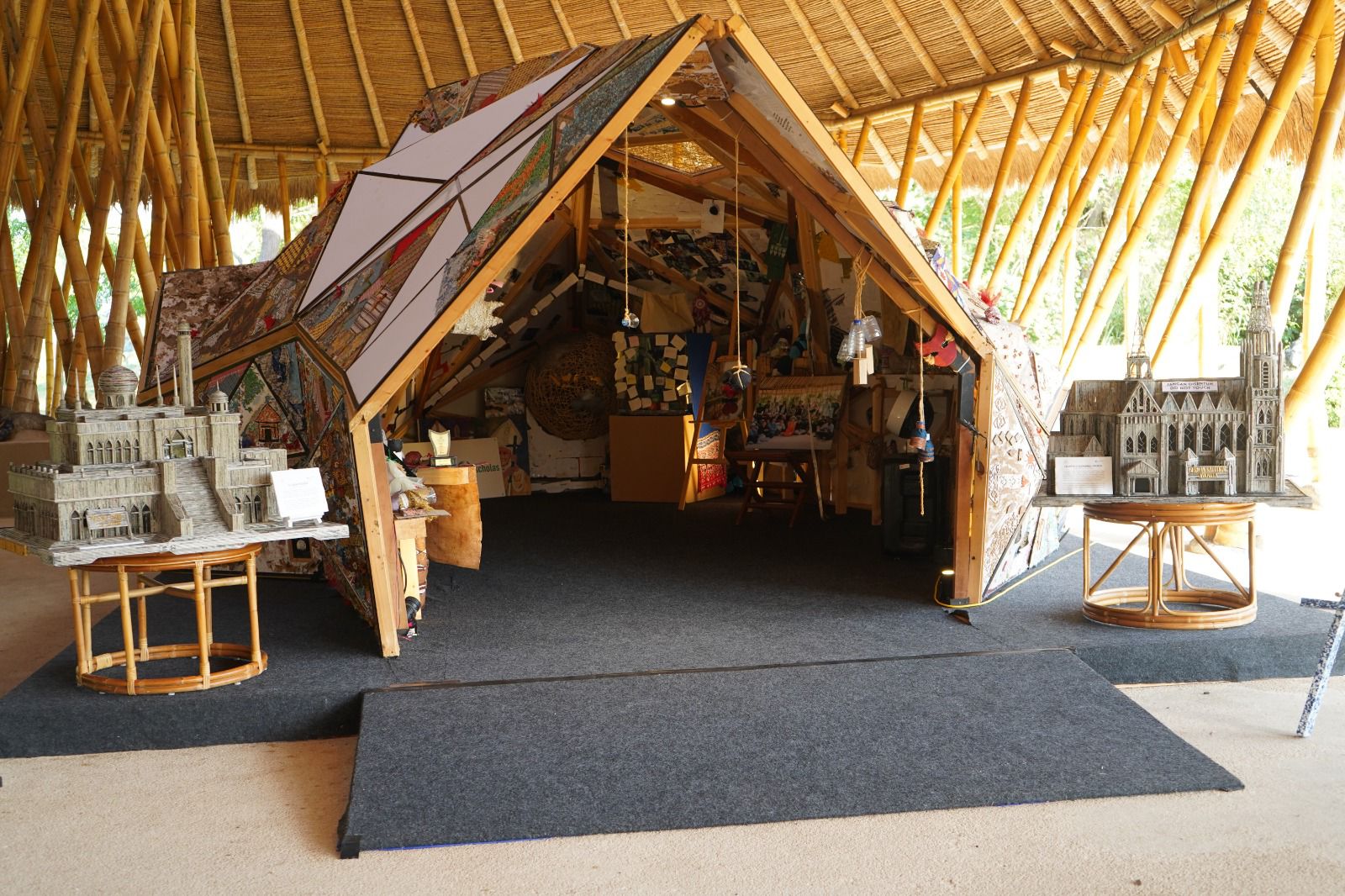
Getting to Know the Hati Installation: A Sacred Space for Listening
Pope Francis' Visit to Indonesia
Pope Francis’ 2024 visit to Indonesia was more than a diplomatic mission, a part of the Pope 45th Apostolic Journey which symbolizes mission of peace, interfaith friendship, and mutual understanding. This visit is part of his pastoral solicitude to visit various Catholic communities around the world. His arrival in Indonesia marked the first papal visit in 35 years, underscoring Indonesia’s global role as a model of pluralism and harmony.
During his visit, Pope Francis engaged in a meaningful interfaith dialogue with the Grand Imam of Istiqlal Mosque, demonstrating a profound gesture if interreligious fraternity and celebrated Mass for Catholics in the country.
One of the most defining moments the visit was Pope Francis’ personal inauguration of the Hati Installation, where he placed the final physical piece on the artwork himself. By doing so, he left behind a living legacy which represent a tangible and long lasting symbol of unity in diversity and peace for Indonesia.
Scholas Occurrentes: Facilitator of the Hati Installation
The Hati Installation is an official project of Scholas Occurrentes, an educational organization founded by Pope Francis. Scholas has a mission to promote peace, integration, and youth empowerment through art, sports, and technology. In Indonesia, Scholas focuses on to strengthening youth’s capacity to lead with their hearts, nurturing future leaders who value empathy over division and dialogue over conflict.
Scholas has initiated various initiatives that bring together young people from diverse backgrounds to participate in dialogue, artistic expression, and community-building activities. These initiatives form the basis of the Hati Installation, which represents Scholas Occurrentes' commitment to building a more inclusive and harmonious society. Through its programs, Scholas bring youth from different religions, cultures, and regions into spaces where they can listen to one another, co-create, and imagine a more inclusive society.
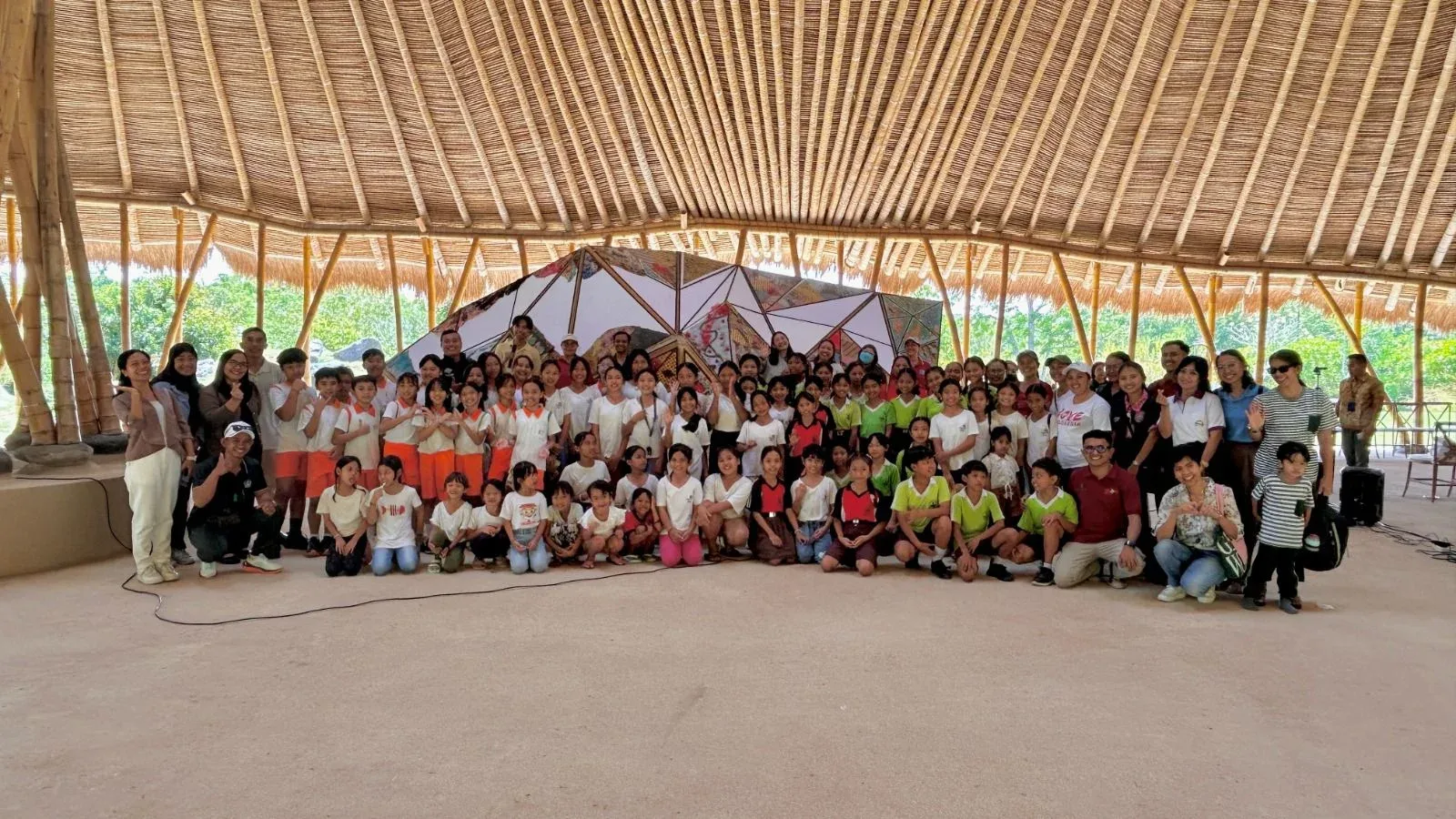
A Collaborative Work
The Hati installation represents the diversity and collective participation of Indonesian youth. It was built by 1,500 children and young people from various regions of Indonesia. Two architects that were involved in the making of Hati, Djoko Murtommo and Marcellus Rafi Kresnaji, said that Hati was designed using recycled materials.
The final structure of the installation features 187 white plates. These plates were then decorated with mosaic patterns through patchwork technique. The decorations are made up of batik patterns and imaginative drawings to reflect the identity of Indonesian youth. Inside the installation, Hati “listens” to the hearts and feelings of Indonesian youth. Visitors will find handwritten notes, personal items, and creative artworks, which represent the expressions of the emotions, aspirations, and stories of young Indonesians.
Not Like Ordinary Artwork
The Hati Polyhedron Installation goes far beyond conventional artwork. It functions as a space explicitly designed to foster empathy through active listening. The core value of this installation emphasizes that listening is not only done with the ‘ears’ but also requires emotional presence and empathy; therefore, listening is also done with the ‘heart’. This message is embedded directly in the design of Hati, which is shaped like a heart.
During its creation, the team behind Hati envisioned an artwork that would symbolize a sacred space for listening and remind us of our collective hope for a shared future. By embedding its meaning in both form and function, Hati reinforces its role as a unique unifying force in today's world.
A Unique Educational Platform
Since 2024, the Hati installation has been located in the Kura Kura Bali Special Economic Zone, under the management of the United In Diversity (UID) Foundation. This installation has become a platform for workshops, dialogues, academic forums, and reflective dialogues. It has hosted activities such as the Tri Hita Karana Forum, UID Workshop, UID Talk, and others.
The installation also attracts visitors from diverse backgrounds, ranging from academics and government officials to religious leaders and local communities. Participants consistently report that Hati deepens their understanding of diversity, peace, and empathy. Collectively, this diverse engagement affirms Hati's function as a critical and vital educational space.
The Future of the Hati Installation
As preparations for next year get underway, the values of Hati remain deeply relevant. In 2026, UID Bali plans to create activities that reflect Hati's role as a platform for reflection, engagement, sincere dialogue, and a sacred space for listening. Hati will continue to bring communities together to connect with the ideals of empathy, unity, and understanding. Thus, Hati functions not only as a work of art but also as a catalyst for meaningful reflection achieved through listening with the ‘heart’.