FROM BALI TO THE WORLD: INDONESIA’S SDG-DRIVEN SEZS INSPIRE GLOBAL ACTION
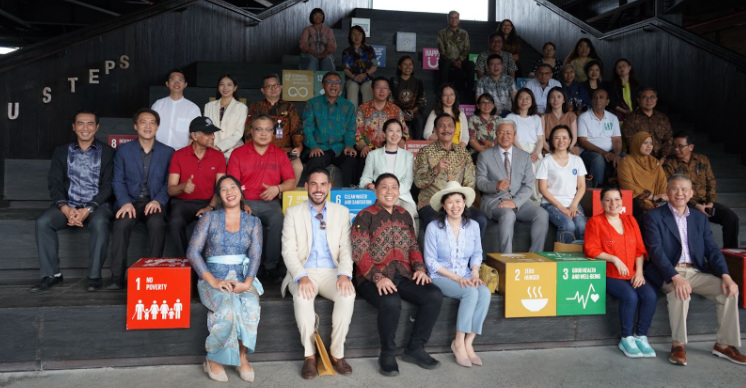
Bali, May 26, 2025 — The Government of Indonesia, together with strategic partners, hosted an international workshop titled “New Era Bali Kerthi Roadmap: Pioneering Special Economic Zones for Wealth, Health, Knowledge, and Creative Industry” at the United In Diversity (UID) Bali Campus at Kura Kura Bali Special Economic Zone (SEZ). This workshop comprised one session of the Tri Hita Karana Inaugural Global Business Summit, a three‑day event held across Bandung, Jakarta, and Bali from May 24 to 26, 2025, under the overarching theme “Global Business Summit on Belt and Road Infrastructure Investment for Better Business, Better World, and Sustainable Development Goals”. The Bali session specifically spotlighted the role of SEZs in advancing sustainable development on both local and global scales.
During this session, speakers and participants examined how SEZs such as Kura Kura Bali can catalyze economic transformation while preserving the environment and empowering communities. Discussions revolved around five pillars: sustainable investment, future technologies, renewable energy, holistic well‑being, and sustainable tourism. “Special Economic Zones are strategic tools for inclusive development. We envision SEZs that can empower local communities, conserve nature, and attract long‑term sustainable investments,” stated H.E. Luhut Binsar Pandjaitan, Chair of Indonesia’s National Economic Council, delivering the opening remarks.
The Bali session also served as the launching point for the Happy Digital X (HDX) 3.0 Program, an initiative aimed at promoting digital development in alignment with the Sustainable Development Goals (SDGs). The program was introduced by Prof. Victor Chan of Tsinghua Shenzhen International Graduate School, and formally endorsed by H.E. Luhut Binsar Pandjaitan through a symbolic signing, reinforcing the Indonesian government’s commitment to digital innovation in the pursuit of sustainability and cross‑sector collaboration.
Throughout the day, a series of in‑depth roundtable discussions explored essential facets of SEZ development. The first session examined strategies for optimizing investment and blended finance to attract impact‑oriented capital, including contributions from family offices. The second session focused on future technologies such as artificial intelligence, digital infrastructure, and the Internet of Things (IoT), and their role in transforming SEZs into centers of sustainable innovation. The third session delved into scalable renewable energy solutions to ensure long‑term resilience. The fourth session addressed integrative approaches to health, longevity, and the quality of life within SEZ communities. The final session concentrated on sustainable tourism practices that protect Bali’s cultural and natural heritage. As a region heavily dependent on tourism, Bali was consistently reminded of the need to maintain its growth in harmony with its rich cultural identity and natural environment, a message that resonated throughout the discussions.
At the conclusion of the workshop, each discussion group presented its main findings and proposed actionable, collaborative recommendations. These included establishing public‑private partnerships, deploying innovation‑driven investment strategies, and designing inclusive development frameworks that can be replicated in SEZs across Indonesia and beyond. “This is not just a workshop, it is a foundational step for collaborative innovation,” said Mega Purnamasari, Director of UID Bali Campus. “SEZs like Kura Kura Bali serve as learning laboratories for inclusive, green, and knowledge‑based development.” As Indonesia moves forward toward its Golden Indonesia 2045 vision, initiatives like this illustrate the nation’s readiness to lead on the global stage demonstrating that economic growth can thrive alongside environmental stewardship and human flourishing.